AI HOME SEARCH
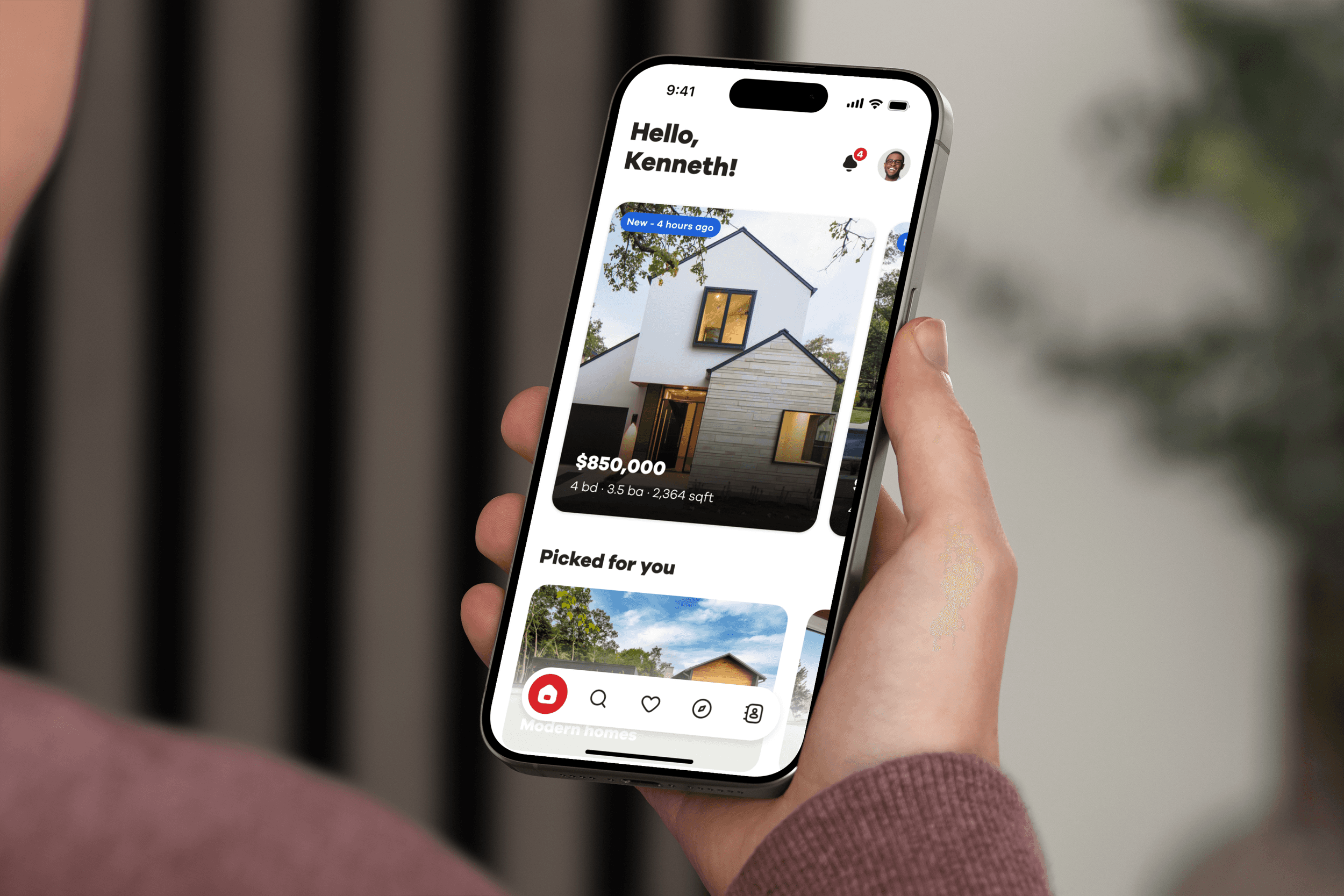
When the industry began shifting toward AI-driven search experiences, I focused my role on shaping the strategic direction, aligning executive stakeholders, and ensuring my organization had the clarity and structure to deliver cross-platform, AI-ready search at scale. Rather than chase a flashy AI layer, we built the foundation that would make AI meaningful.
The Problem
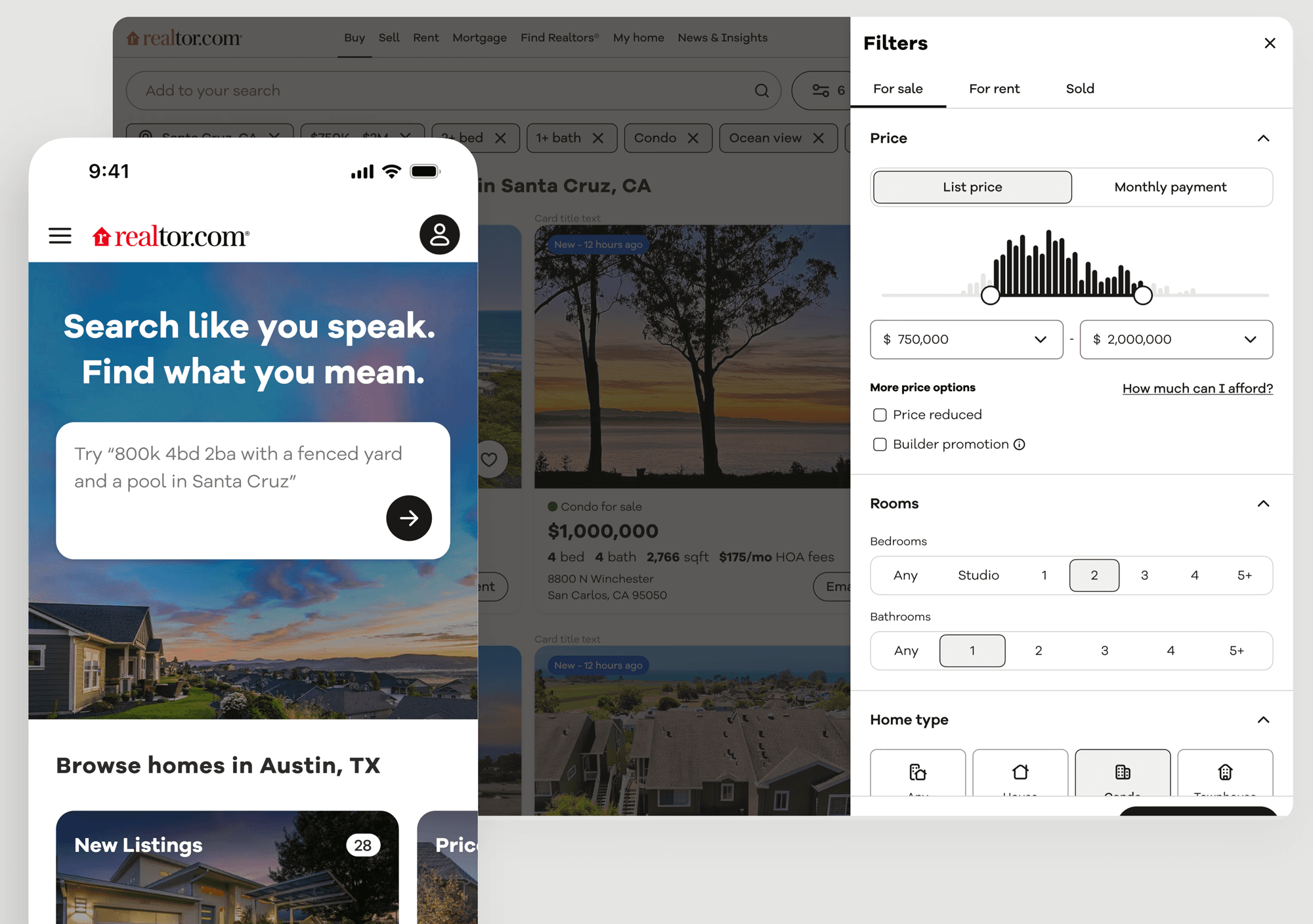
Data revealed a persistent friction point: only a small fraction of users engaged with filters beyond the basics. Interviews showed why — people feared “filtering themselves out of the perfect home.” And beneath that behavior was a deeper problem: inconsistent taxonomies, fragmented patterns across platforms, and a filter system no longer aligned to modern expectations or future AI capabilities.
Only ~13% of users used advanced filters
A system built for power users was actively discouraging everyday consumers.
At the executive level, my responsibility was to bring cross-functional leaders into alignment and clear the path for the teams closest to the work to deliver.
What We Did
The redesign moved through three coordinated tracks — all executed by my teams with strategic guidance and oversight from design leadership.
I partnered with product and engineering leads to define the strategic plan for consolidating and standardizing our filter system. My design and research teams led the work:
Consolidating redundant filters
Removing low-value options
Aligning naming and grouping across platforms
Establishing semantic structures for AI interpretation
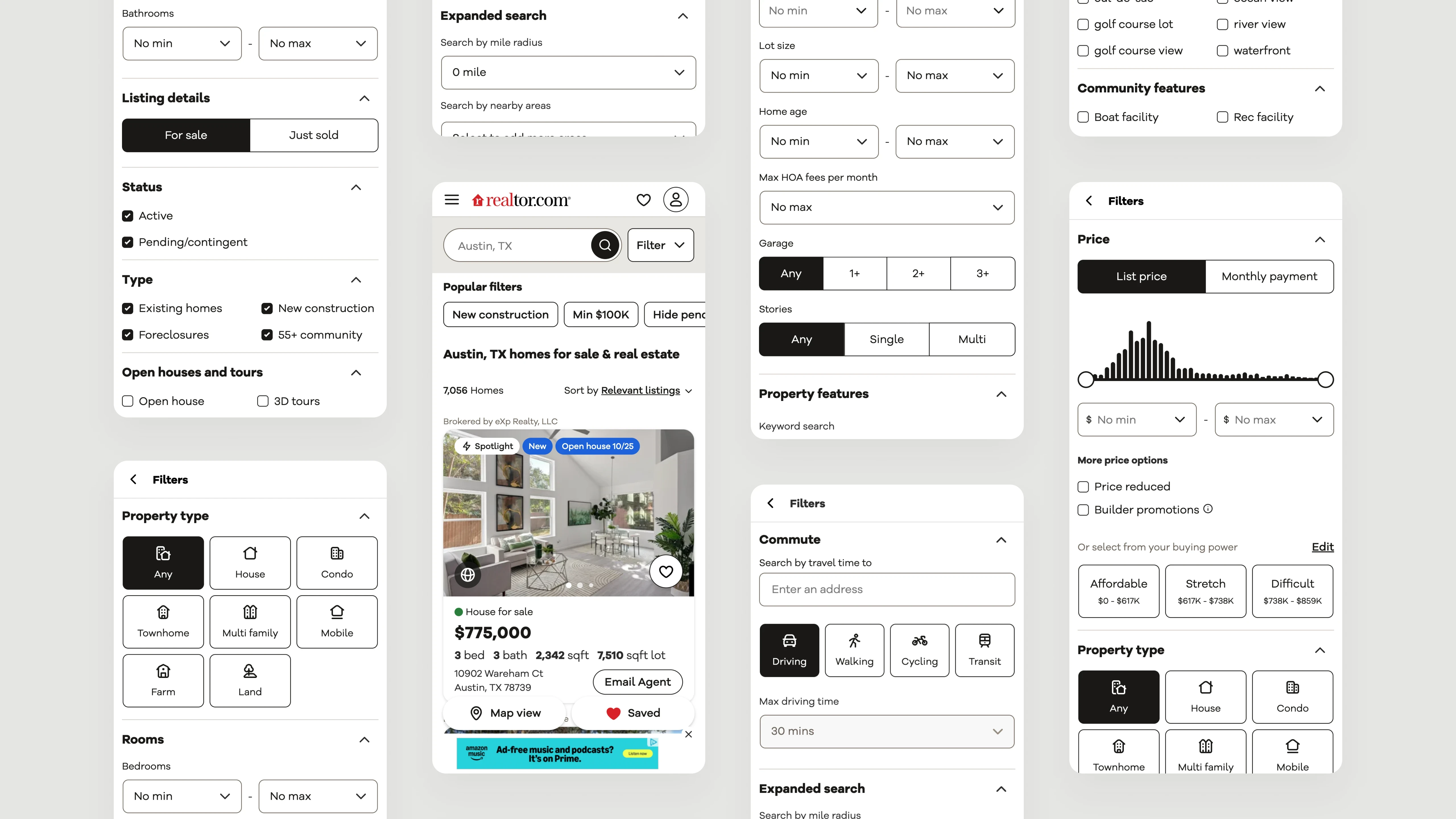
40+ filters consolidated → one unified system
The backbone for natural-language understanding.
This gave AI a structured vocabulary to work with — something the previous system simply couldn’t provide.
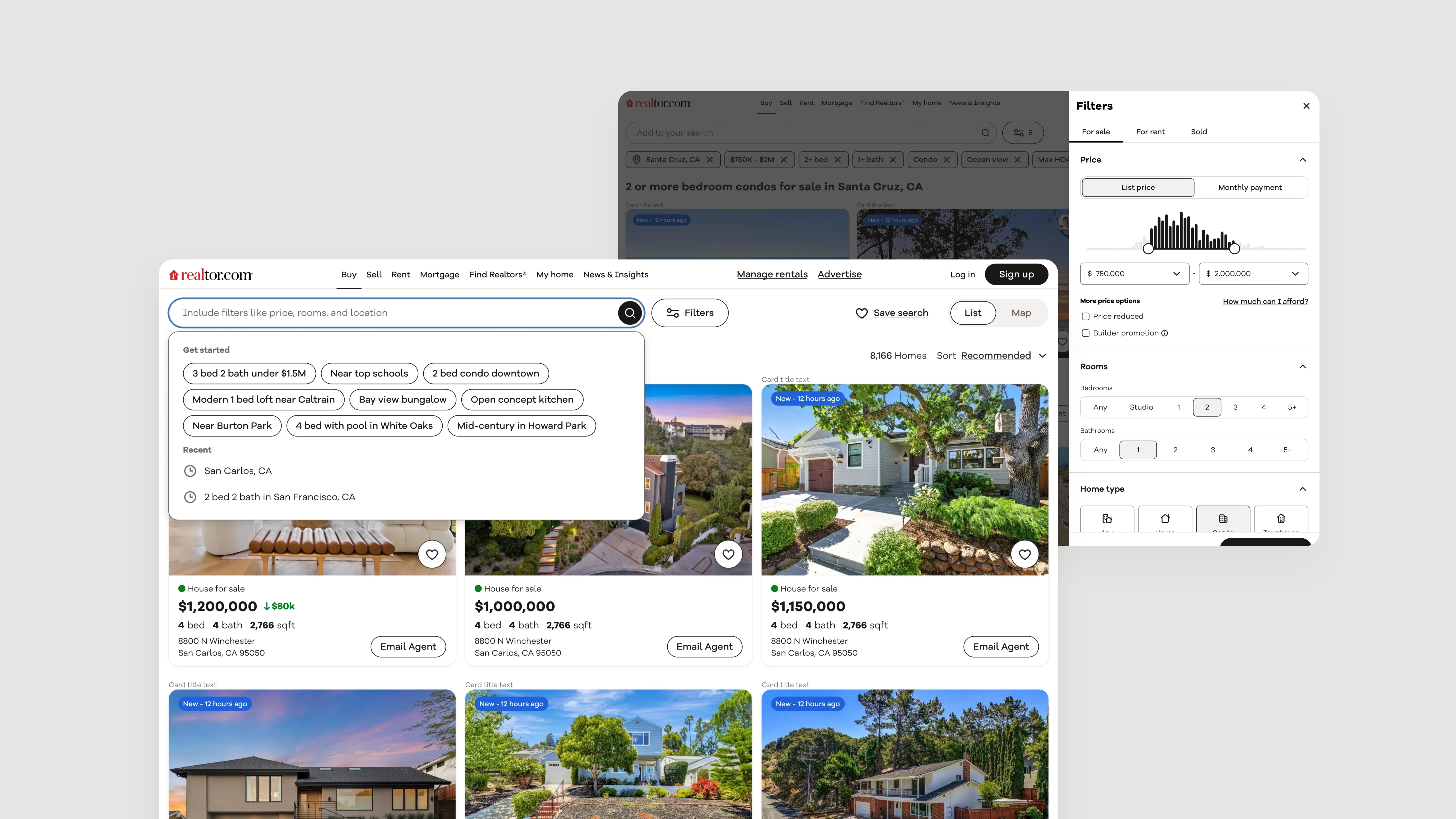
Redesigned Search Interface
I set the direction for a search experience that reduced cognitive load and increased user trust. My teams delivered:
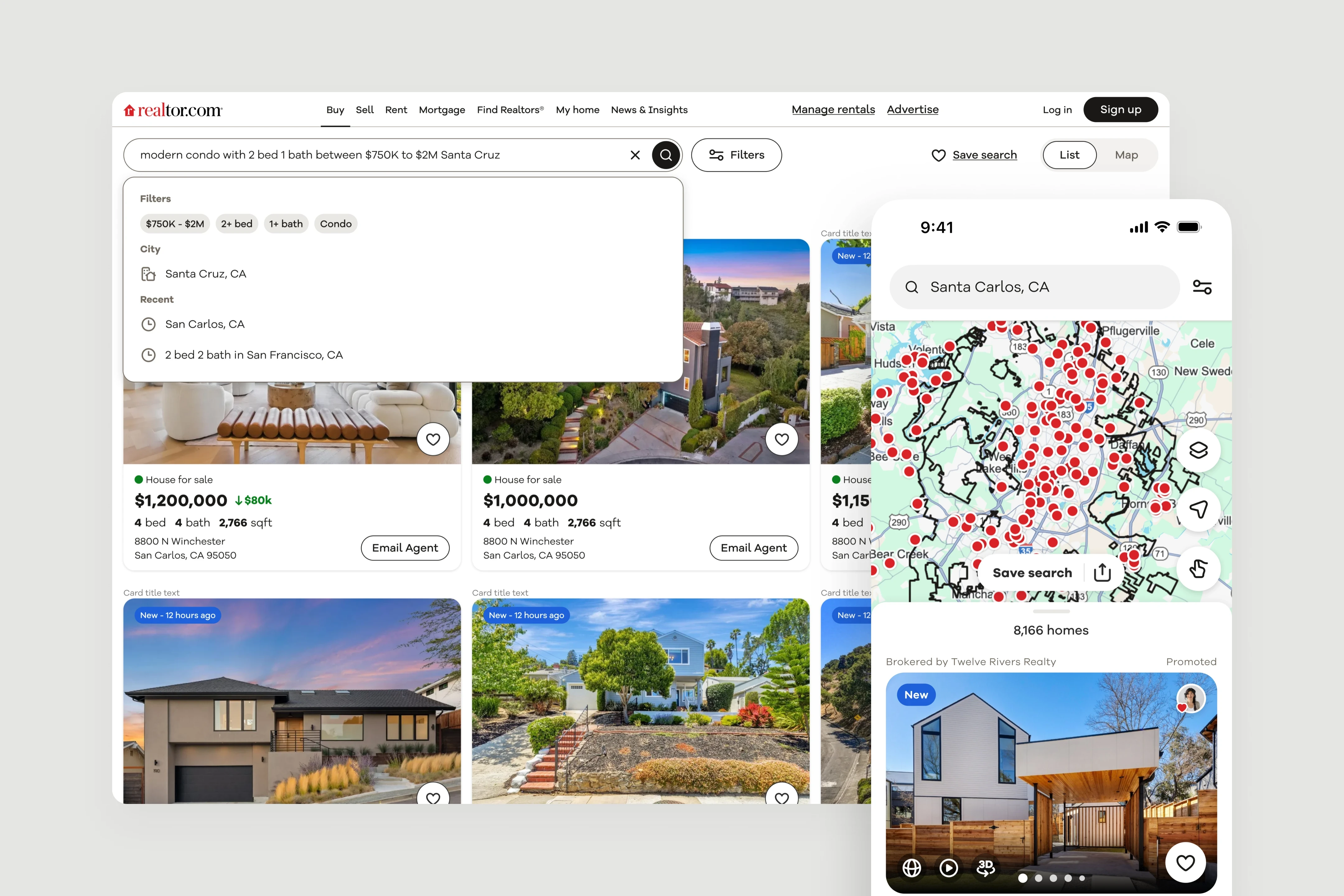
Chip-based multi-select patterns
Simplified, mobile-friendly controls
Streamlined bed/bath UX
Improved hierarchy and scanning
Accessibility updates across iOS, Android, and web
From checkboxes → modern, multi-select chips. Faster, clearer, and designed for refinement after AI suggestions. The experience became more predictable, consistent, and confidence-building.
Scalable System & Platform Parity
We expanded the design system to support these changes at scale:
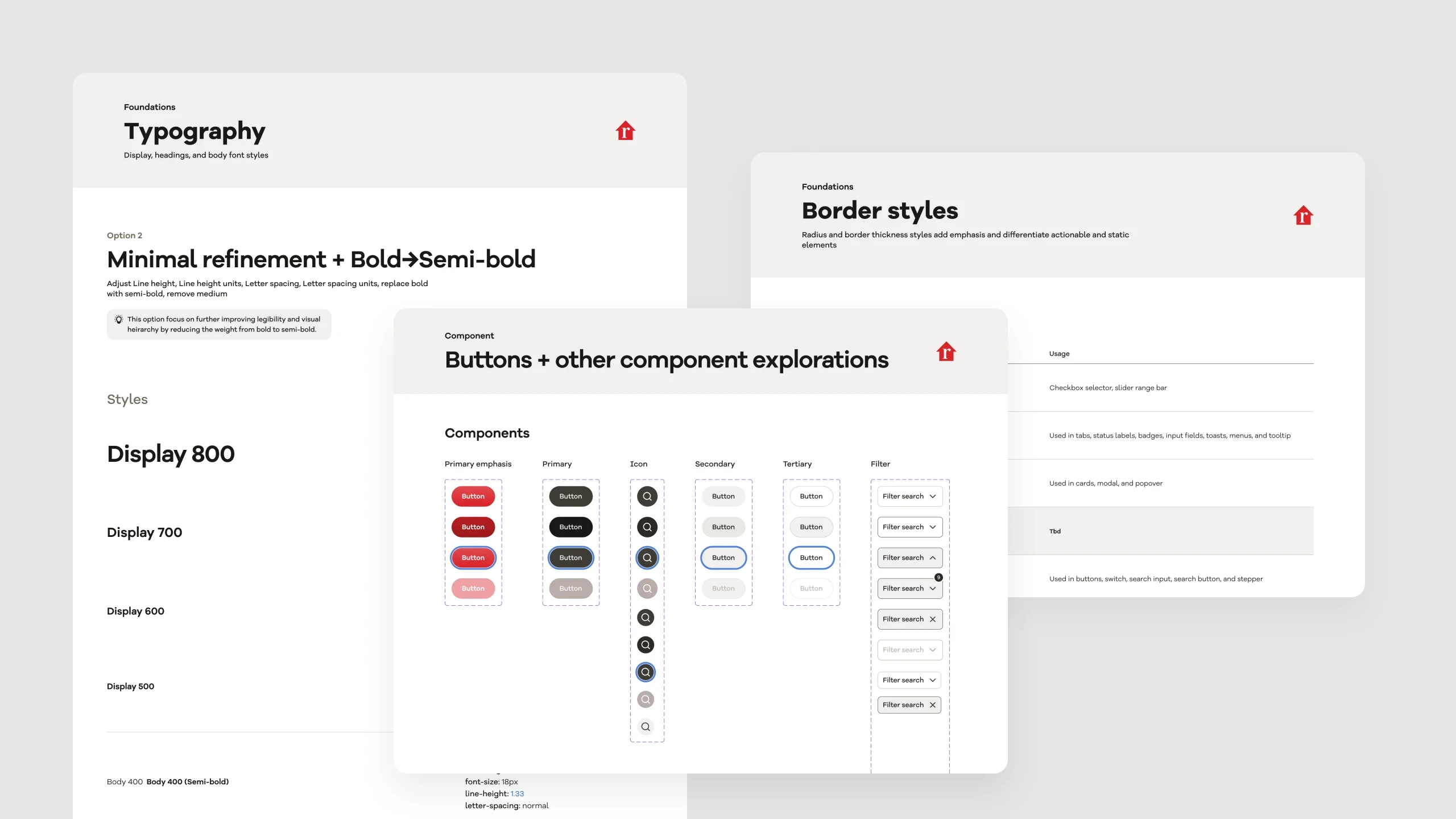
Updated tokens and component specs
Unified typography and color hierarchy
Standardized interaction patterns
Platform parity between web, iOS, and Android
First time in company history:
Full parity across web, iOS, and Android.
This work created the foundation for future AI-first initiatives across all surfaces.
Outcomes
In eight weeks, the organization delivered a full overhaul of the search experience — strategically, systemically, and with the speed required to support our 2025 AI launch.
12% increase in engagement from search → listing detail pages
Unified, AI-ready taxonomy across all platforms
Consistent experience across iOS, Android, and web
Scalable system for future AI-powered discovery features
AI didn’t start with the model. It started with the system.
This project reinforced something I’ve believed for years: AI succeeds only when the underlying systems are intentional, coherent, and human-centered.
My role was to create clarity, remove ambiguity, and ensure our cross-functional teams had the alignment and support to deliver. The work they produced not only modernized search — it laid the groundwork for the next chapter of AI-powered home discovery.