Design Systems

Design systems are a crucial key to efficiency in building products as well as maintaining consistency across products. I have led teams in delivering substantial work in this area, both at Spiceworks and at Realtor.com. This case study will focus on RDC specifically, as that effort was much more comprehensive and challenging, with an incredible scope of work.
When I stepped into the executive role overseeing design at Realtor.com, one of the most urgent structural challenges wasn’t a single feature — it was the foundation beneath every feature: a fragmented, inconsistent, multi-platform design system that slowed teams down, created unnecessary decision-making, and held back both quality and velocity.

My responsibility was to set the strategic direction, secure cross-functional alignment, and ensure my design, research, systems, and engineering partners had what they needed to rebuild a unified system capable of supporting a 75M+ monthly-user platform.

This was not a component library refresh — it was a complete operating-system overhaul for the entire product organization.

Design systems are a crucial key to efficiency in building products as well as maintaining consistency across products. I have led teams in delivering substantial work in this area, both at Spiceworks and at Realtor.com. This case study will focus on RDC specifically, as that effort was much more comprehensive and challenging, with an incredible scope of work.

When I stepped into the executive role overseeing design at Realtor.com, one of the most urgent structural challenges wasn’t a single feature — it was the foundation beneath every feature: a fragmented, inconsistent, multi-platform design system that slowed teams down, created unnecessary decision-making, and held back both quality and velocity.

My responsibility was to set the strategic direction, secure cross-functional alignment, and ensure my design, research, systems, and engineering partners had what they needed to rebuild a unified system capable of supporting a 75M+ monthly-user platform.

This was not a component library refresh — it was a complete operating-system overhaul for the entire product organization.

Design systems are a crucial key to efficiency in building products as well as maintaining consistency across products. I have led teams in delivering substantial work in this area, both at Spiceworks and at Realtor.com. This case study will focus on RDC specifically, as that effort was much more comprehensive and challenging, with an incredible scope of work.

When I stepped into the executive role overseeing design at Realtor.com, one of the most urgent structural challenges wasn’t a single feature — it was the foundation beneath every feature: a fragmented, inconsistent, multi-platform design system that slowed teams down, created unnecessary decision-making, and held back both quality and velocity.

My responsibility was to set the strategic direction, secure cross-functional alignment, and ensure my design, research, systems, and engineering partners had what they needed to rebuild a unified system capable of supporting a 75M+ monthly-user platform.

This was not a component library refresh — it was a complete operating-system overhaul for the entire product organization.

Design systems are a crucial key to efficiency in building products as well as maintaining consistency across products. I have led teams in delivering substantial work in this area, both at Spiceworks and at Realtor.com. This case study will focus on RDC specifically, as that effort was much more comprehensive and challenging, with an incredible scope of work.

When I stepped into the executive role overseeing design at Realtor.com, one of the most urgent structural challenges wasn’t a single feature — it was the foundation beneath every feature: a fragmented, inconsistent, multi-platform design system that slowed teams down, created unnecessary decision-making, and held back both quality and velocity.

My responsibility was to set the strategic direction, secure cross-functional alignment, and ensure my design, research, systems, and engineering partners had what they needed to rebuild a unified system capable of supporting a 75M+ monthly-user platform.

This was not a component library refresh — it was a complete operating-system overhaul for the entire product organization.

company

Realtor.com and Spiceworks

focus

Design Systems

Information Architecture

The problem

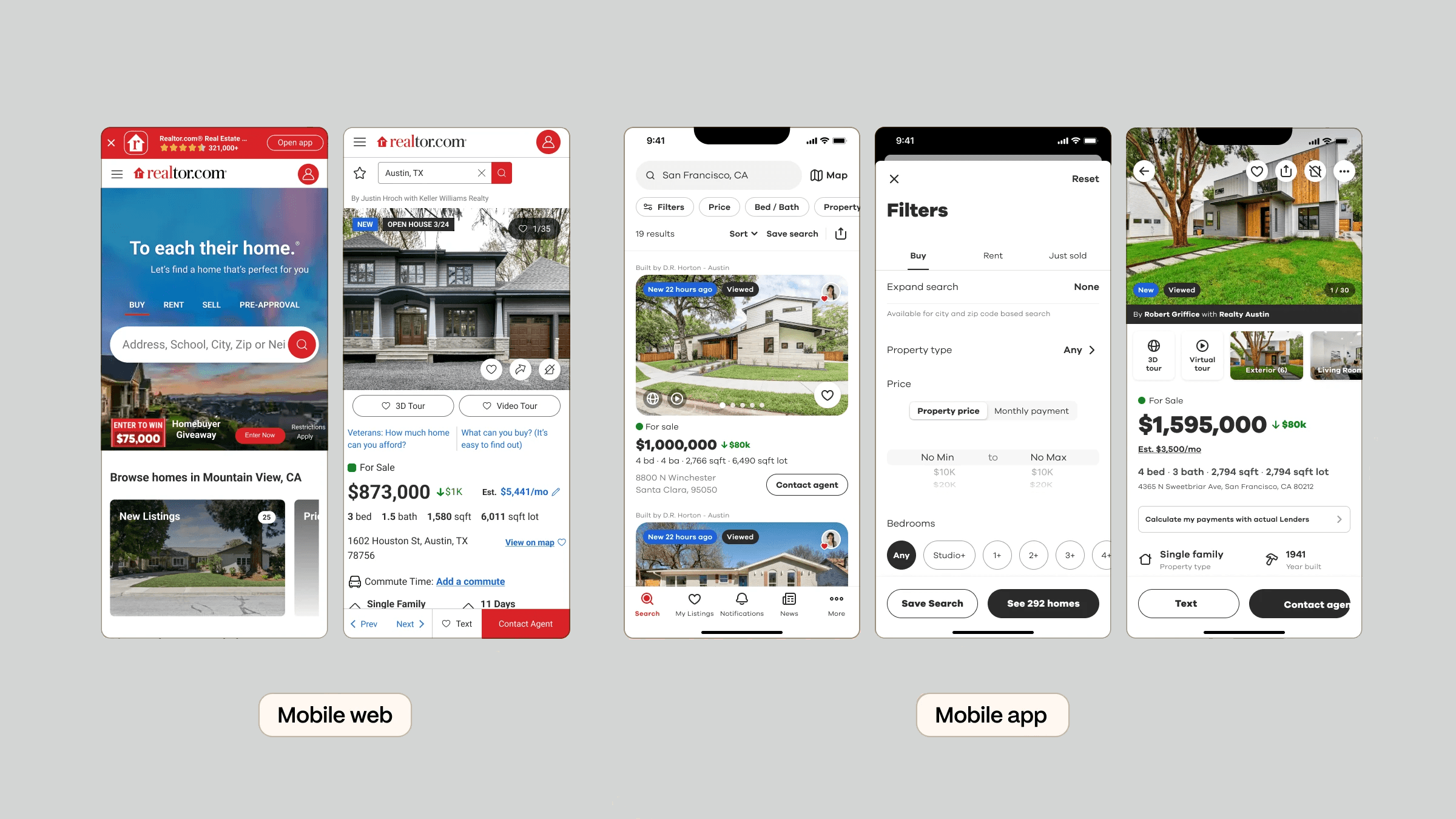
Realtor.com’s products were built on fragmented patterns and ad-hoc components across iOS, Android, and web. This created design and engineering inefficiencies, inconsistent user experiences, accessibility gaps, and meaningful revenue losses due to slower development cycles.


  • 350+ divergent components across teams

  • No shared token architecture

  • Inconsistent visual hierarchy & accessibility issues

  • High design/development duplication

  • Slow deployment velocity and elevated design debt

  • Teams spending ~60% of time recreating basics instead of solving problems
what we did

I guided the strategy and alignment; my design systems, platform, and product teams executed a multi-phase rebuild across 14 months.

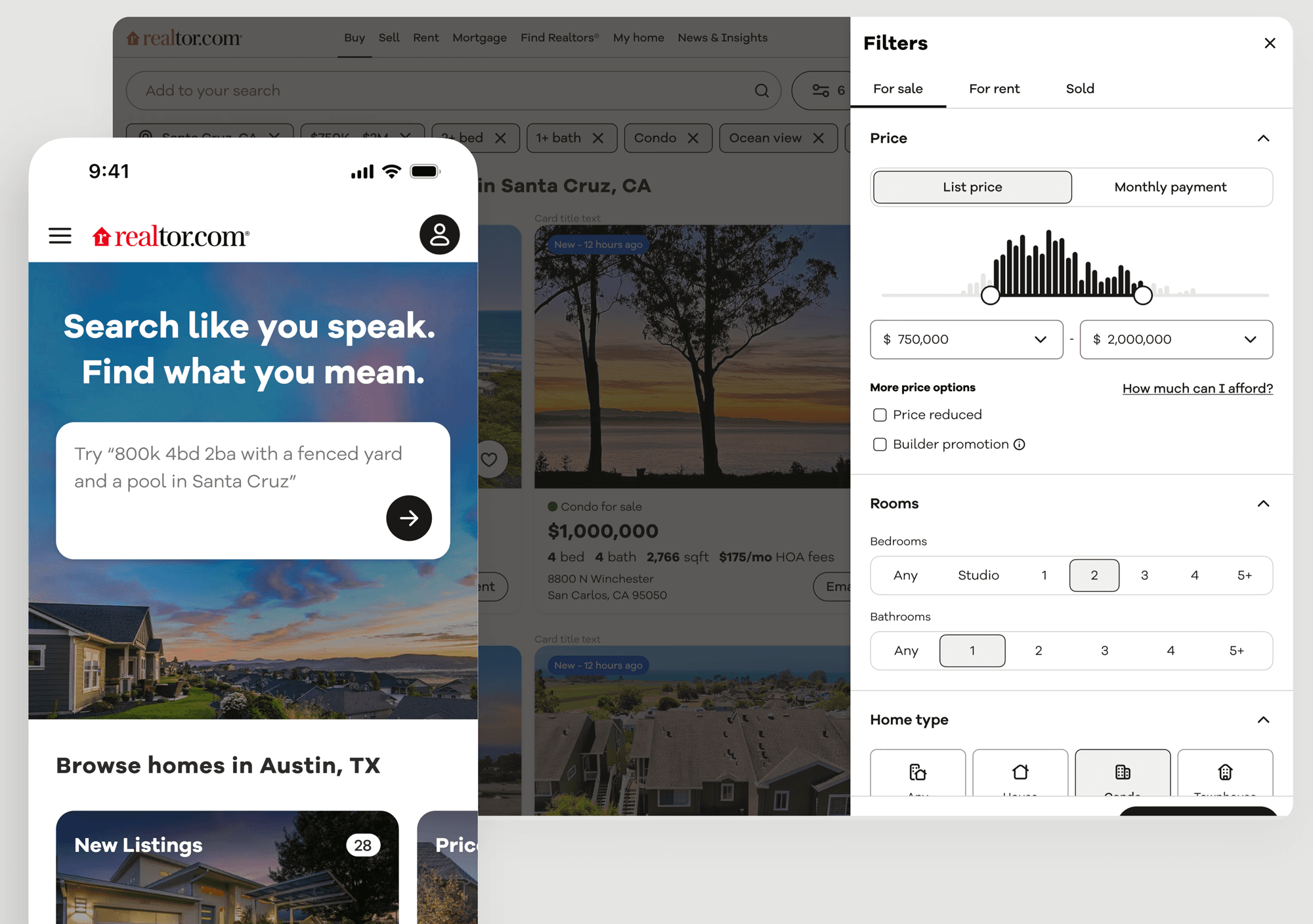
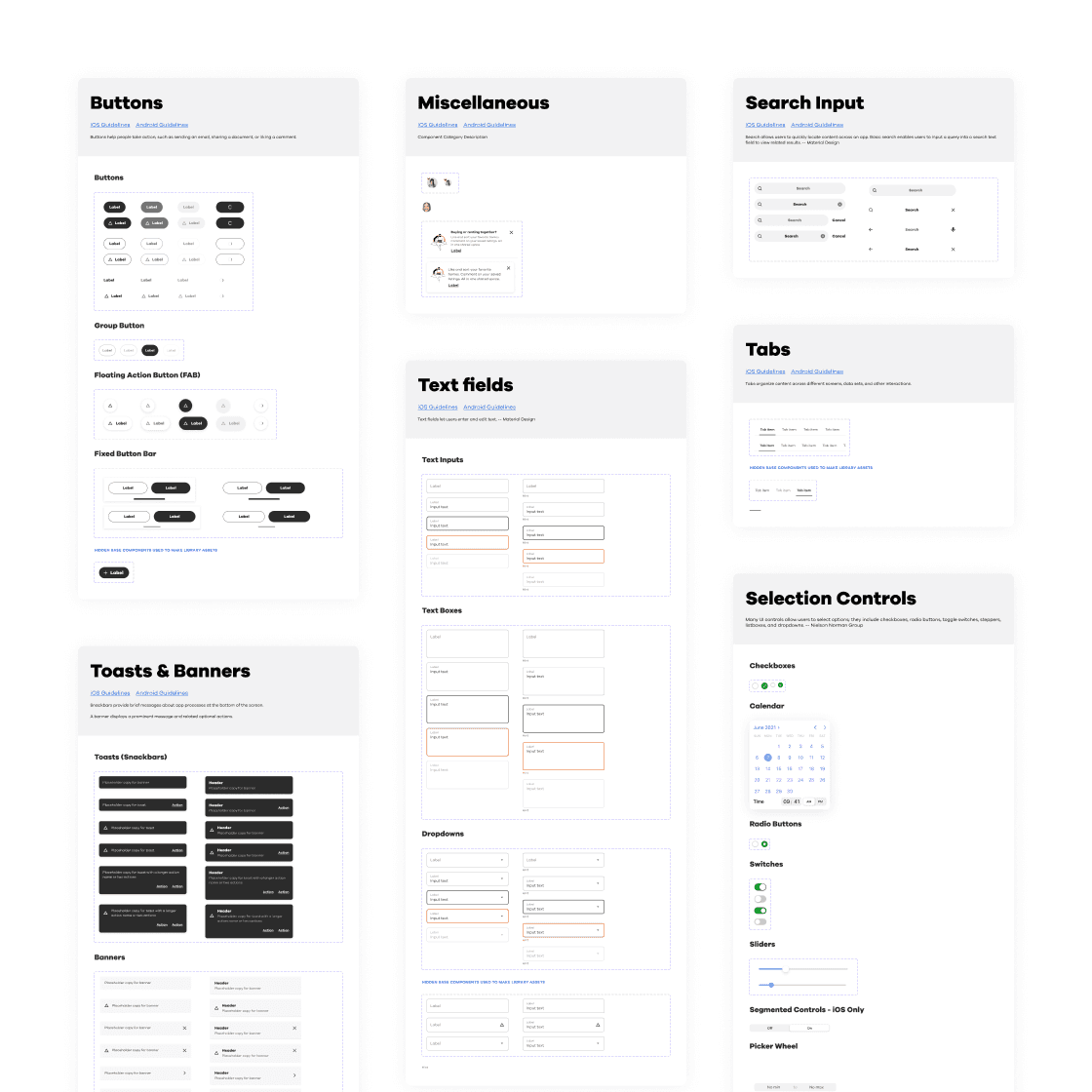
1. Unified Component Library

  • Consolidated hundreds of components into a single governed system

  • Standardized states, variants, and interaction patterns

  • Established accessibility and quality standards

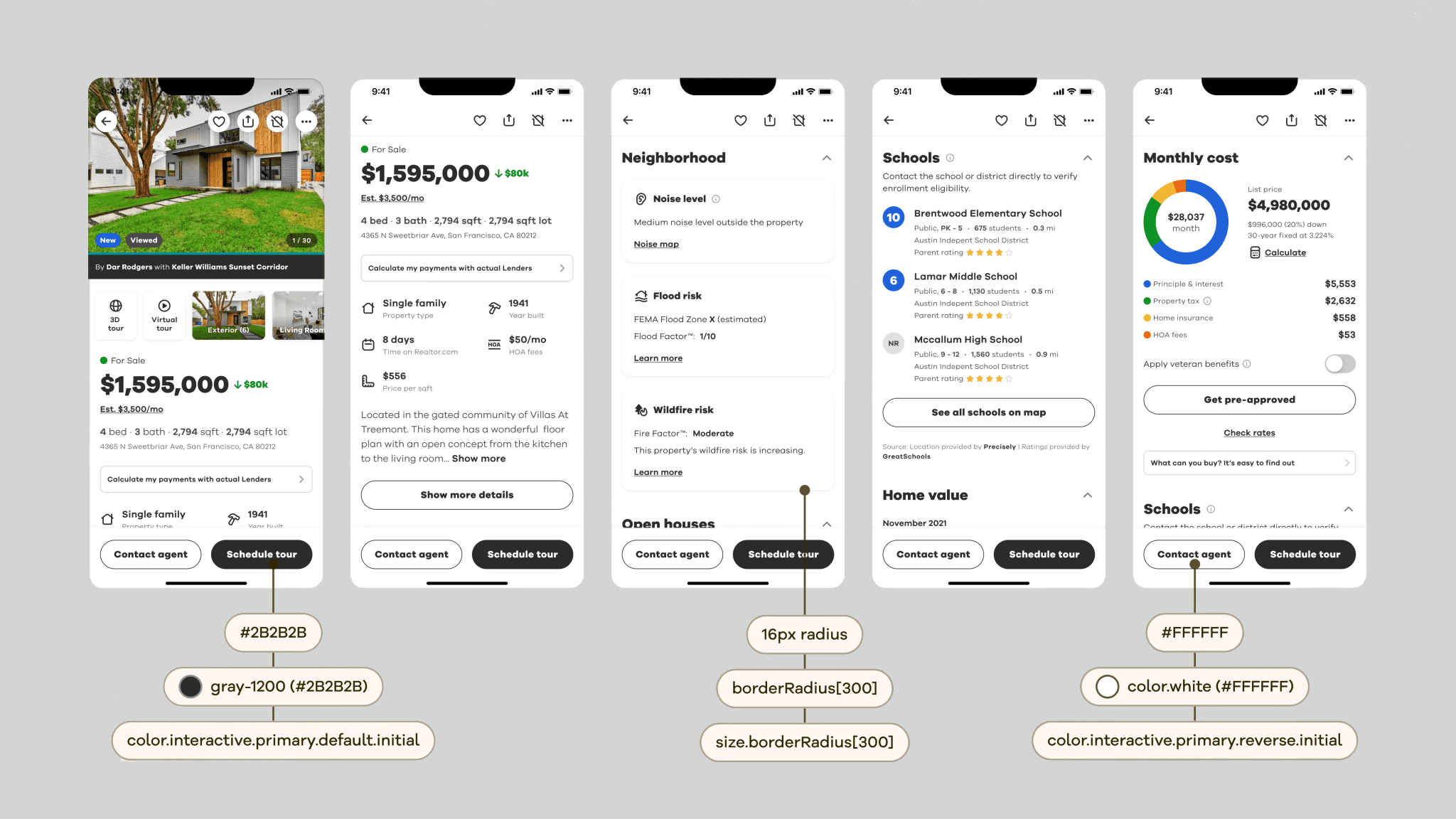
2. Cross-Platform Token Architecture

  • Typography, spacing, color, motion, elevation

  • Shared design → engineering naming, contracts, and parity

  • Tokens implemented across all platforms

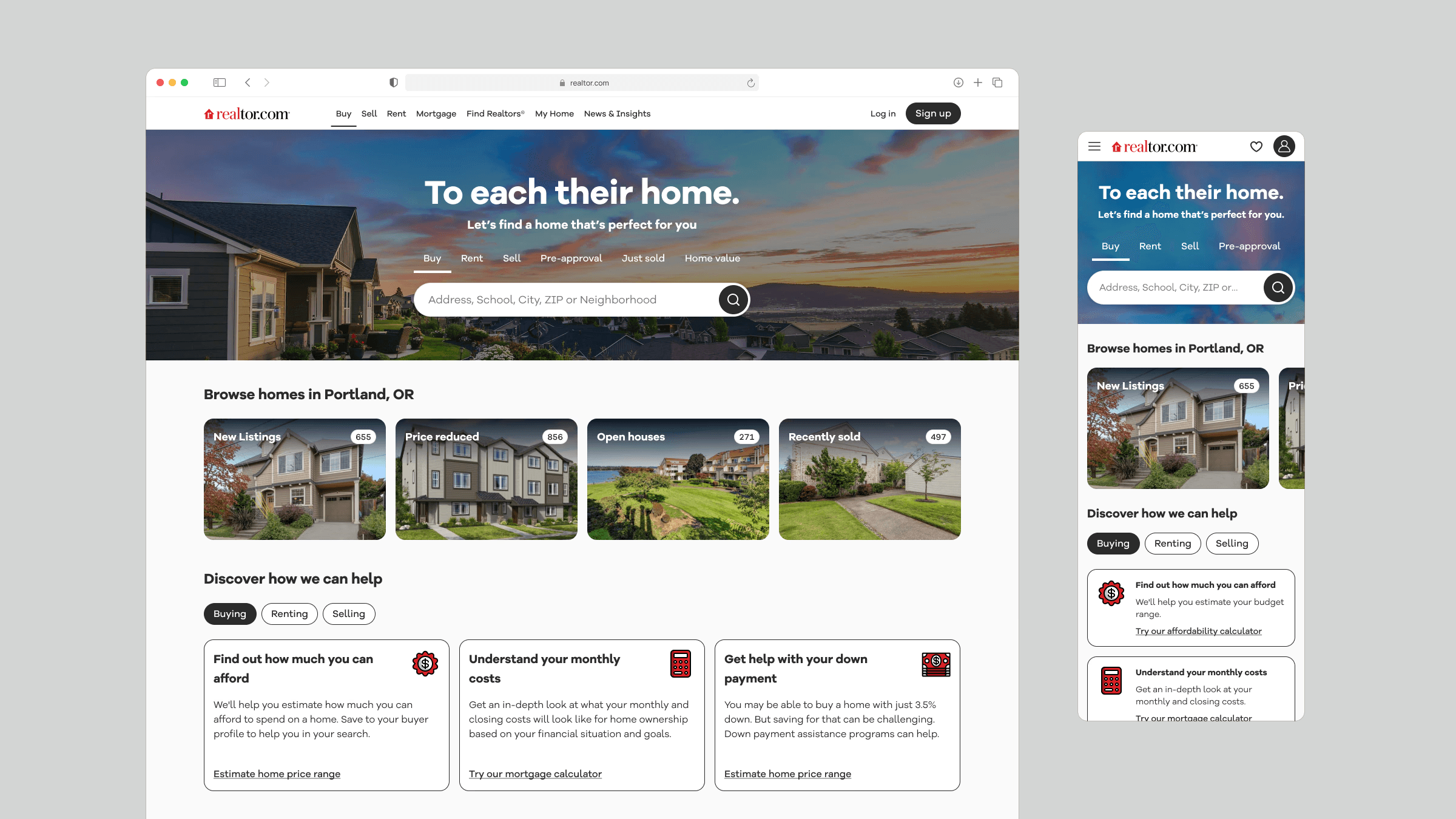
3. Brand & Visual Modernization

  • Refreshed the visual language

  • Harmonized hierarchy, spacing, and color scales

  • Enabled more consistent, confident consumer experiences

4. Governance & Documentation

  • Contribution model for new components

  • System-wide usage guidelines

  • Engineering parity documentation, code samples, and release processes

  • Weekly cross-functional support and alignment
Outcomes

The redesigned system transformed velocity, quality, and consistency across the org — and produced immediate financial value.

Business & Operational Impact


  • Several hundred thousand dollars/month saved due to faster dev cycles

  • ~70% faster time to deploy new features

  • Teams reclaimed ~60% of their time to focus on high-impact product work

  • Significant reduction in design and code duplication

  • Accessibility and brand consistency dramatically improved

Organizational Impact


  • A single source of truth for design + engineering

  • Stronger alignment between product, design, and engineering

  • A scalable foundation for AI-first experiences and future platform growth